Untitled #1
Acoustic Drone Detection with CNN Spectrogram Analysis
Lorem ipsum dolor sit amet, consectetur adipiscing elit, sed do eiusmod tempor incididunt ut labore et dolore magna aliqua. Ut enim ad minim veniam, quis nostrud exercitation ullamco laboris nisi ut aliquip ex ea commodo consequat. Duis aute irure dolor in reprehenderit in voluptate velit esse cillum dolore eu fugiat nulla pariatur. Excepteur sint occaecat cupidatat non proident, sunt in culpa qui officia deserunt mollit anim id est laborum.
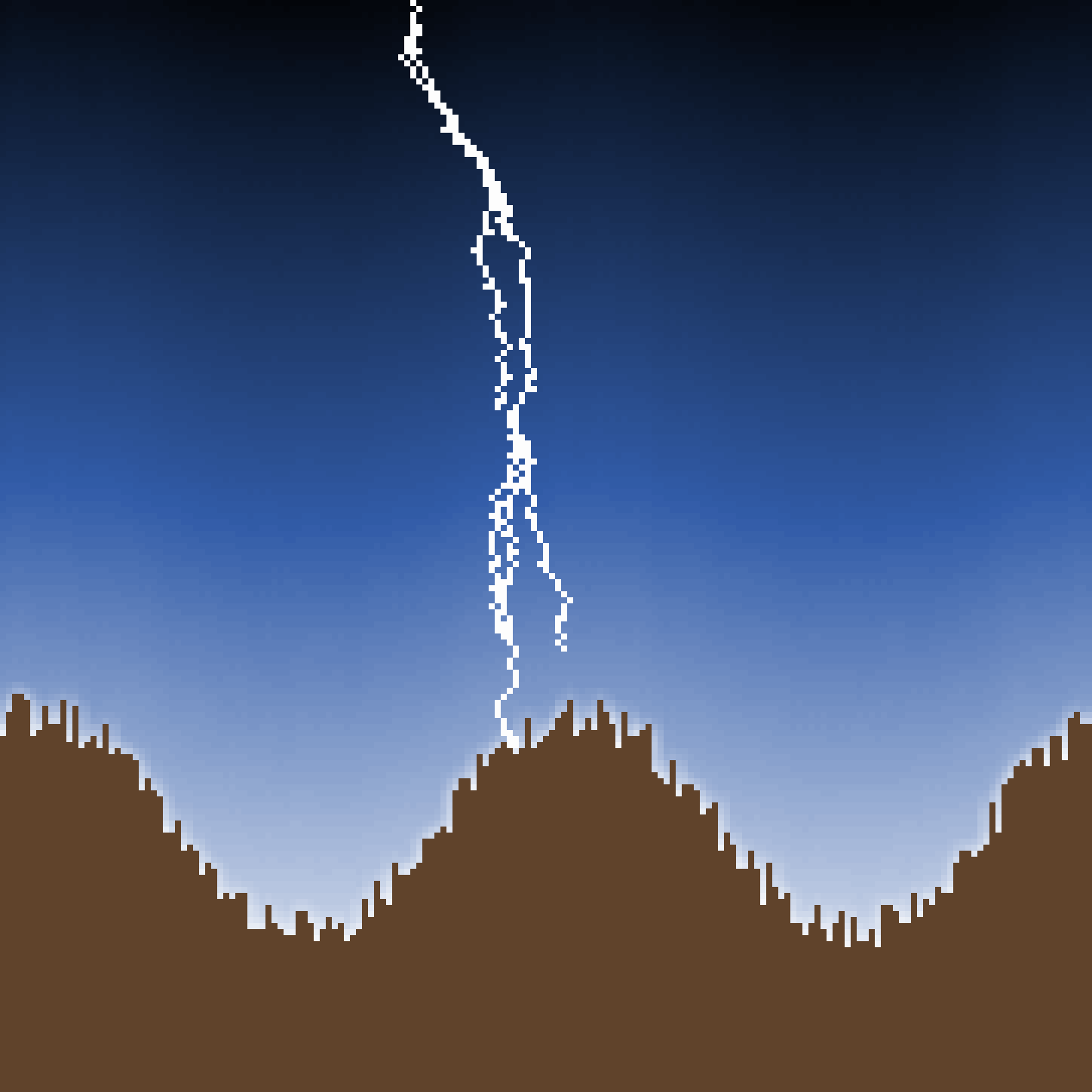
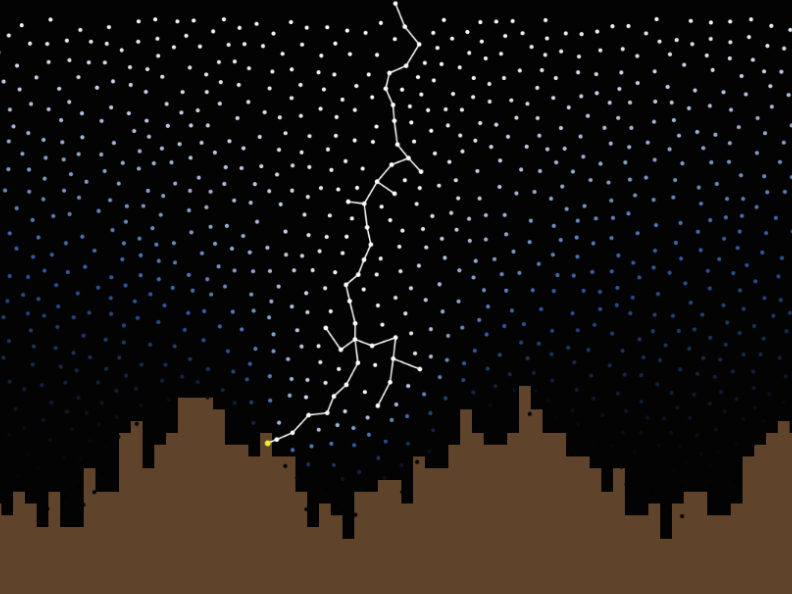
I made the original NetLogo model to see whether simple local rules could produce a branching discharge. The mesh revision was developed with AI assistance and asks what happens when the growing channel changes the field that guides it. This is an experiment in emergence. Distances are in model units, and the potential is normalized.
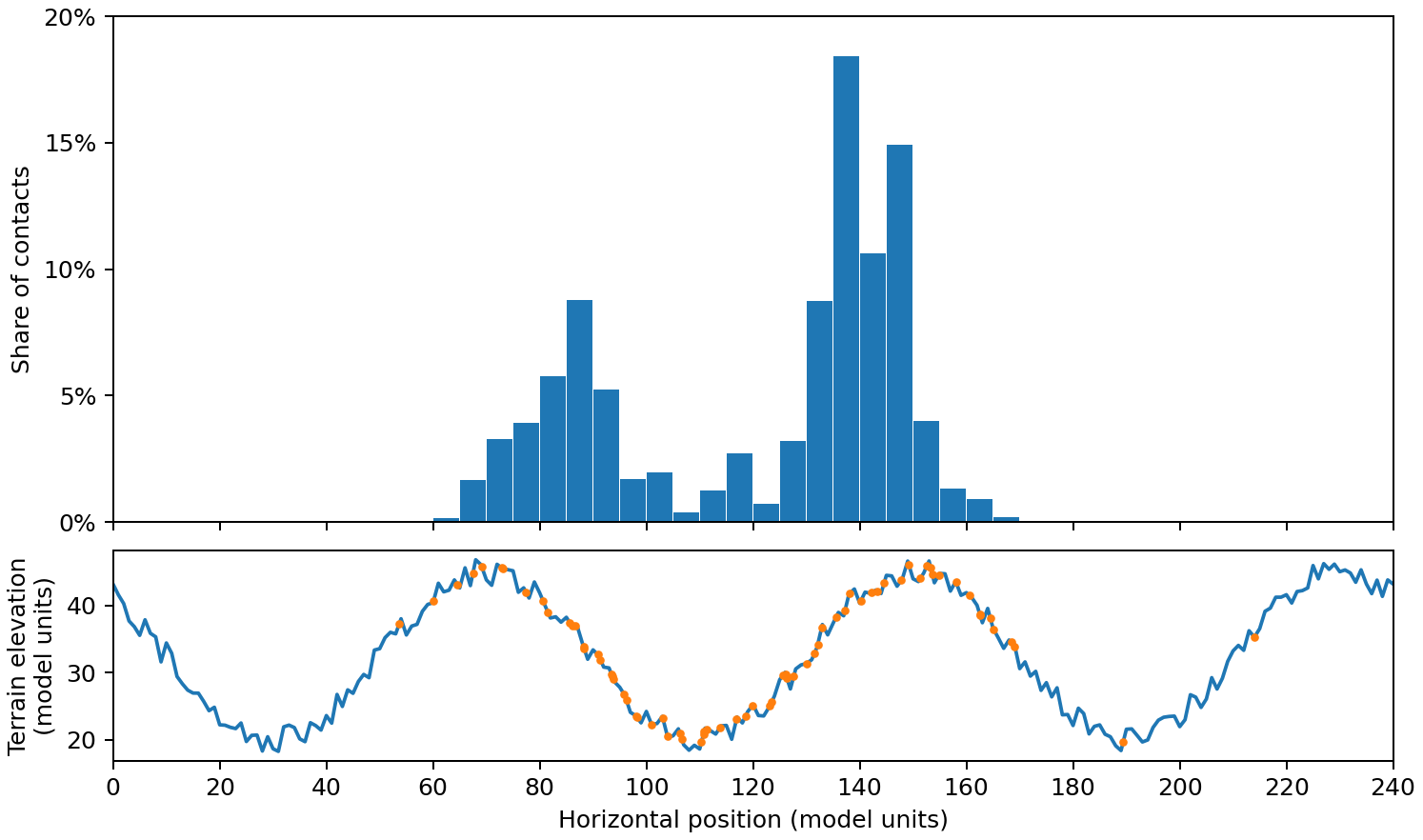
The contact experiment kept the terrain, mesh, and starting point fixed and varied the random choices that grow the channel. In a batch of 4,096 simulated strikes, 56.7% landed between x = 130 and 155, and 28.6% landed between x = 65 and 95.
The two bands describe this particular setup. The histogram counts strikes in five-unit intervals; the orange dots below show every distinct contact location, including rare ones.
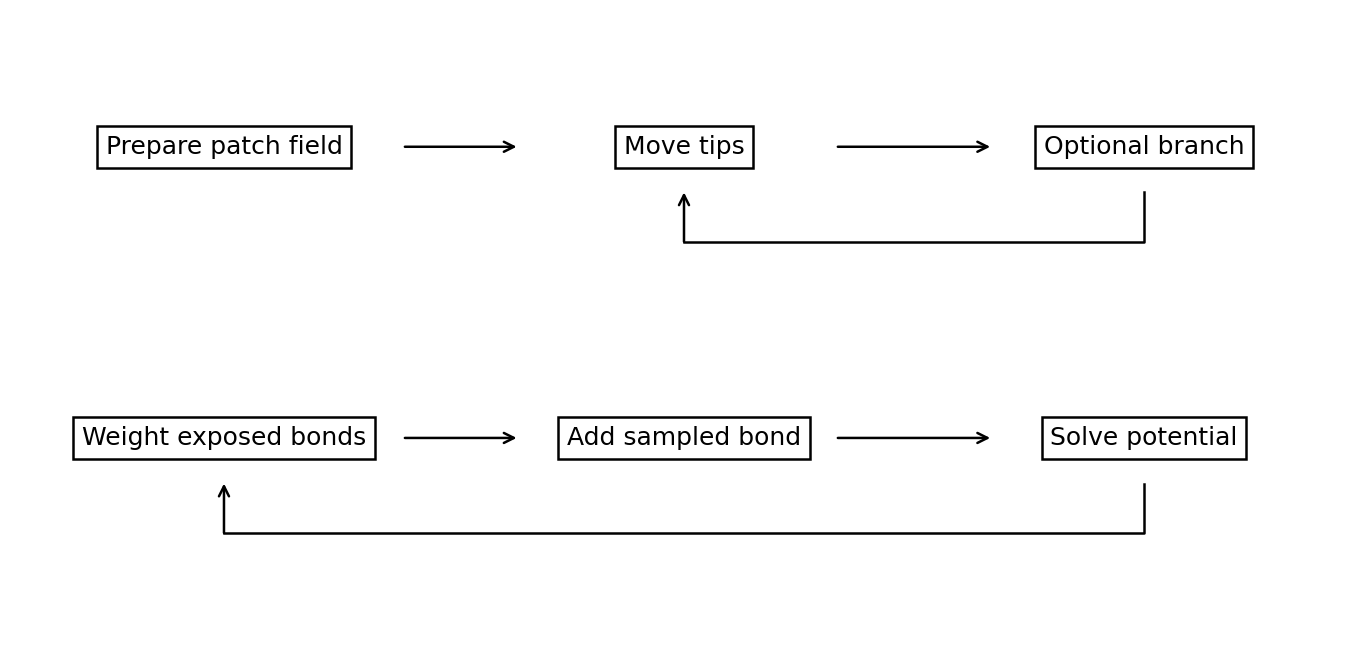
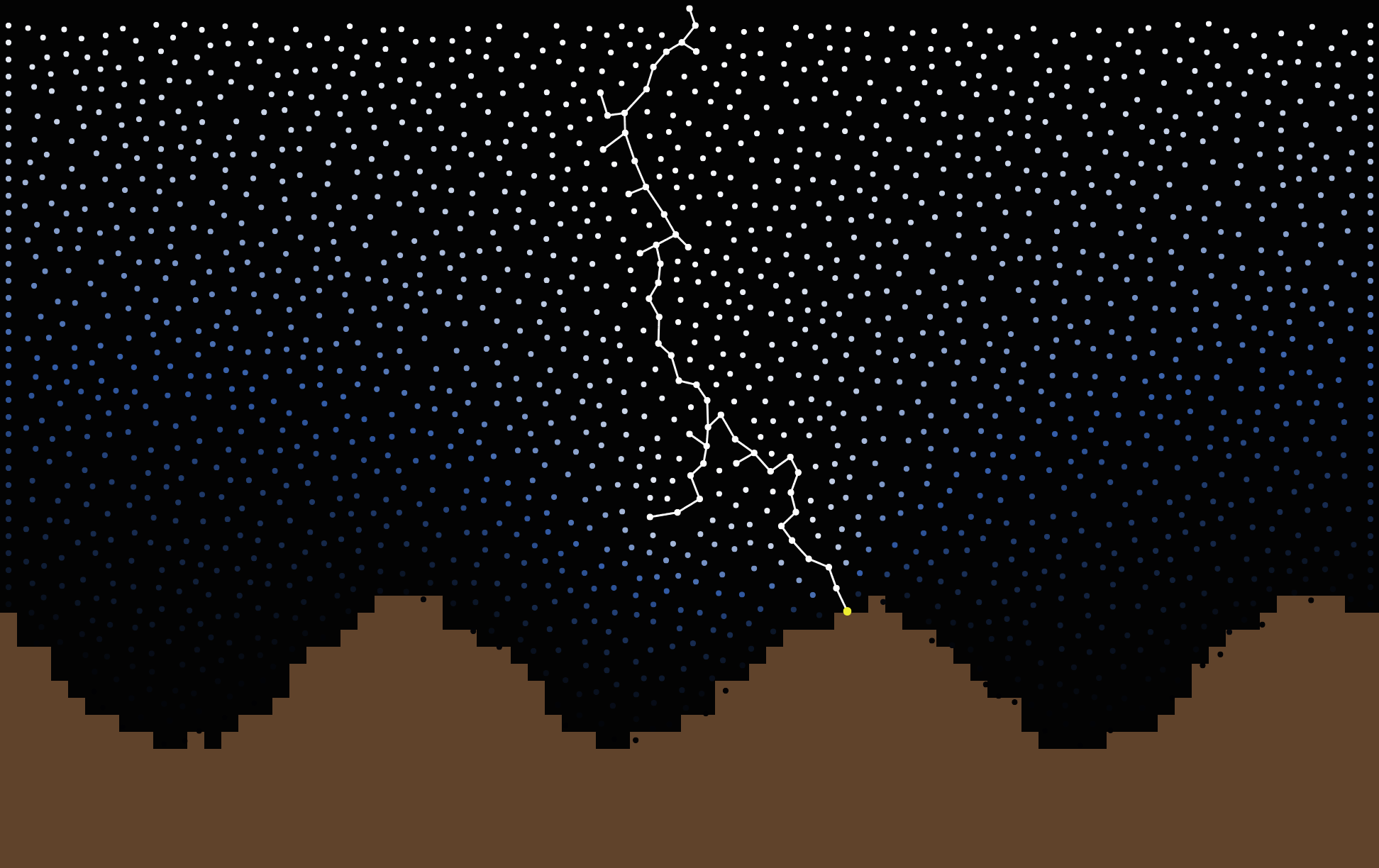
The revised model grows one bond at a time. Each eligible bond gets a weight based on conductance and the potential rise along it. Adding a bond changes which vertices are held at the channel potential, so the field is solved again before the next choice.
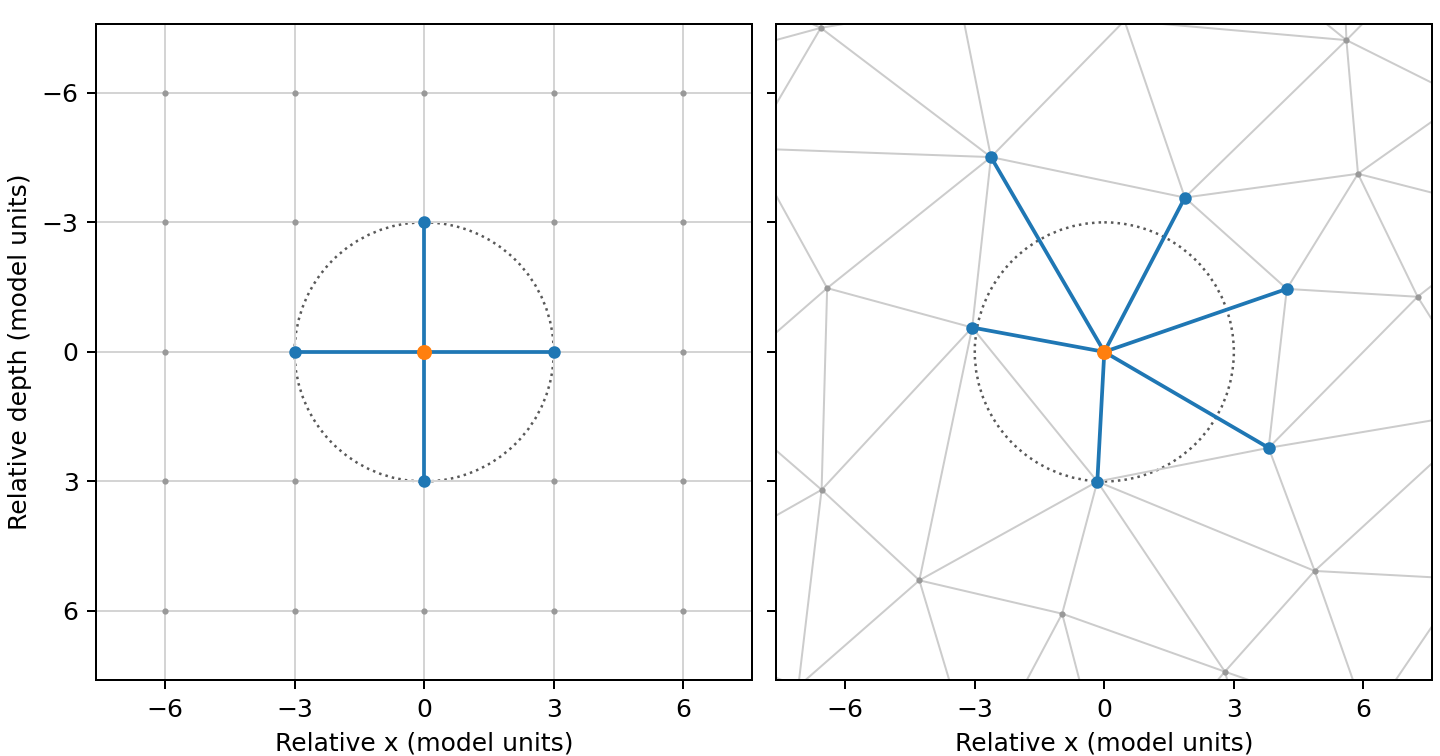
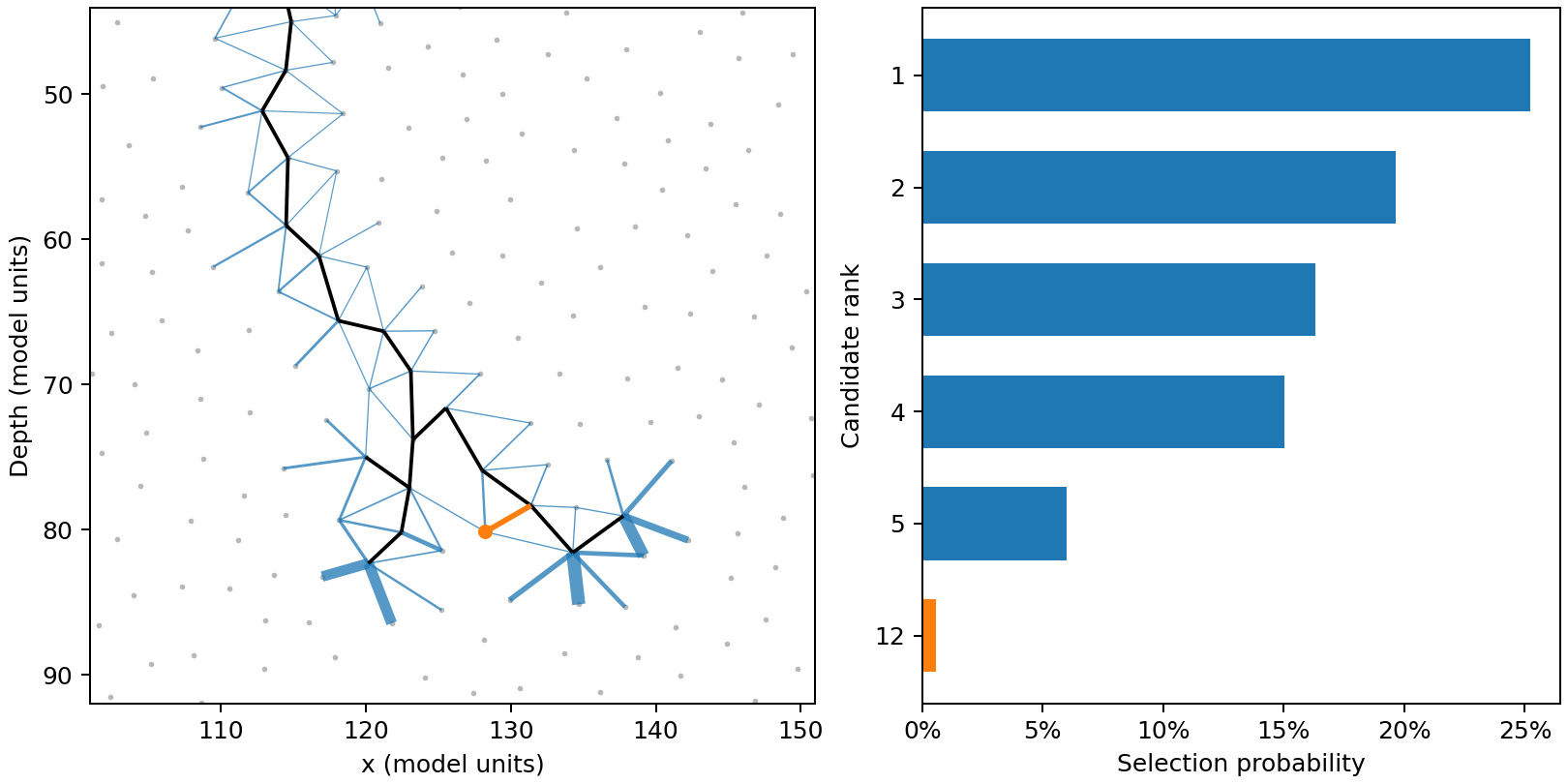
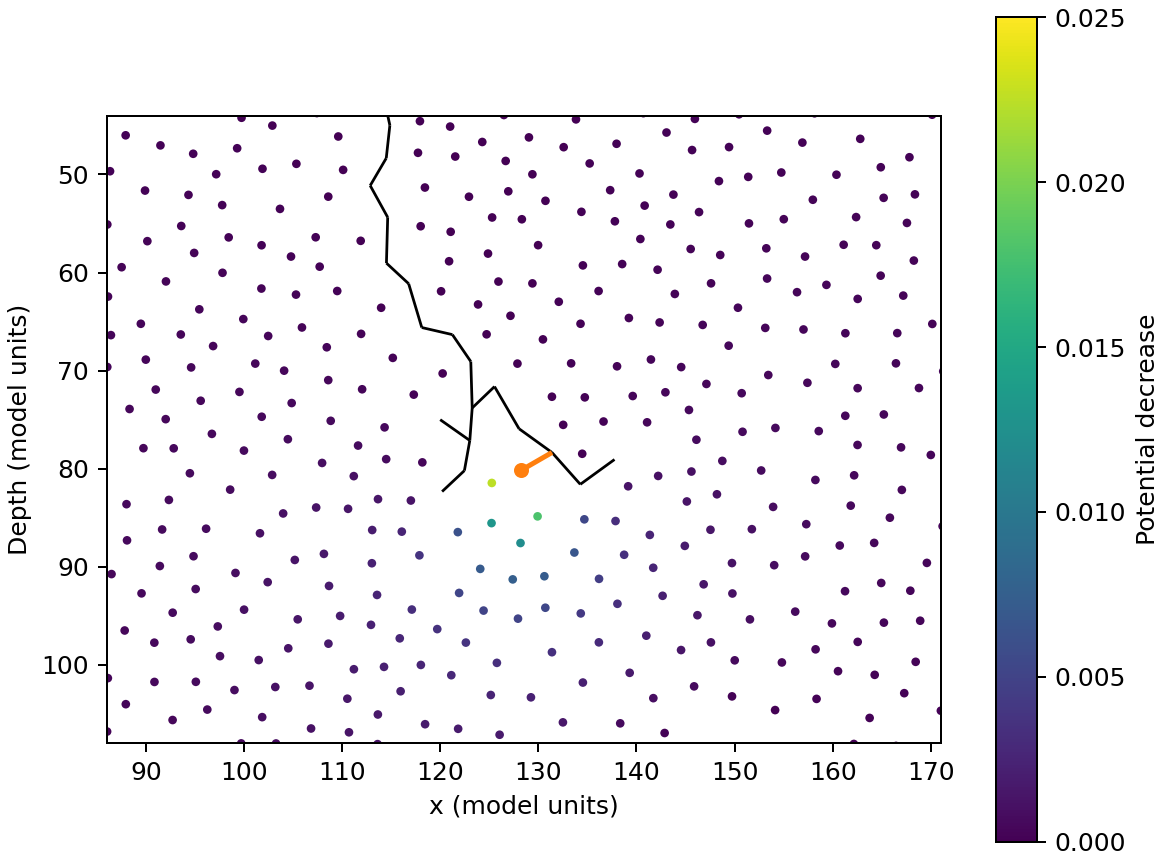
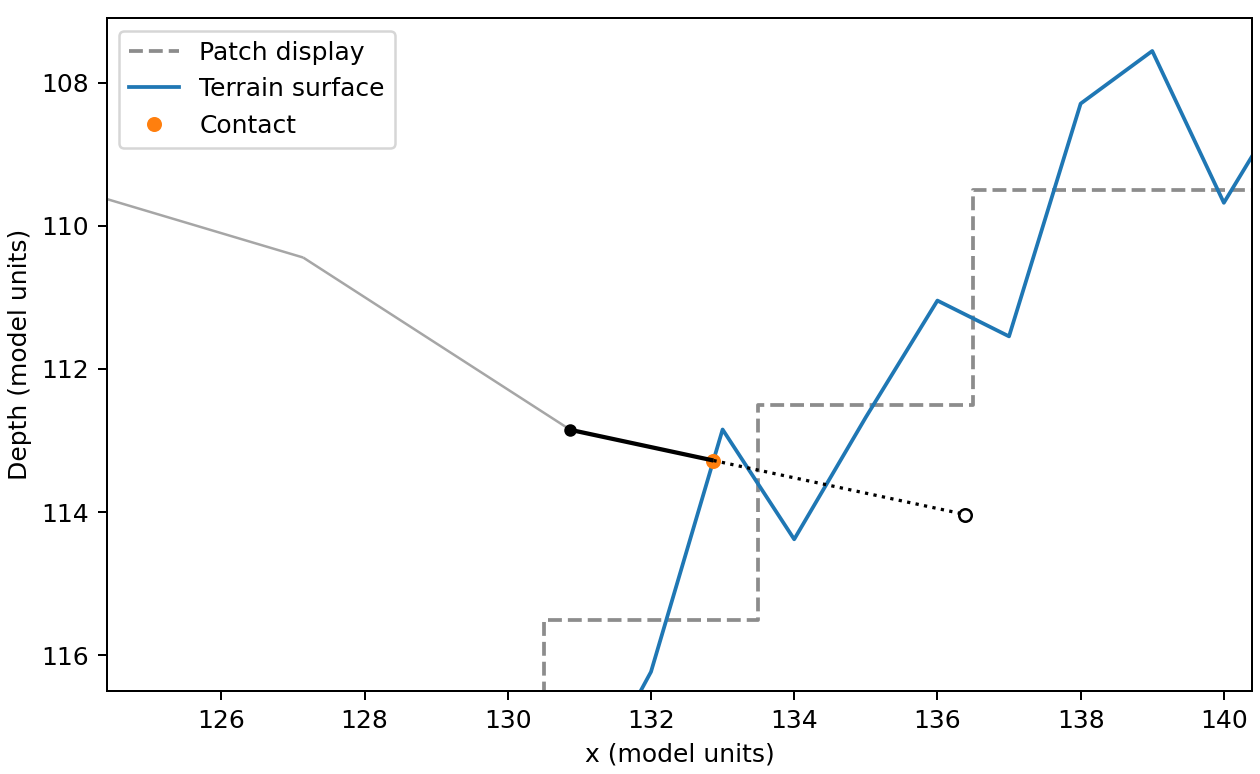
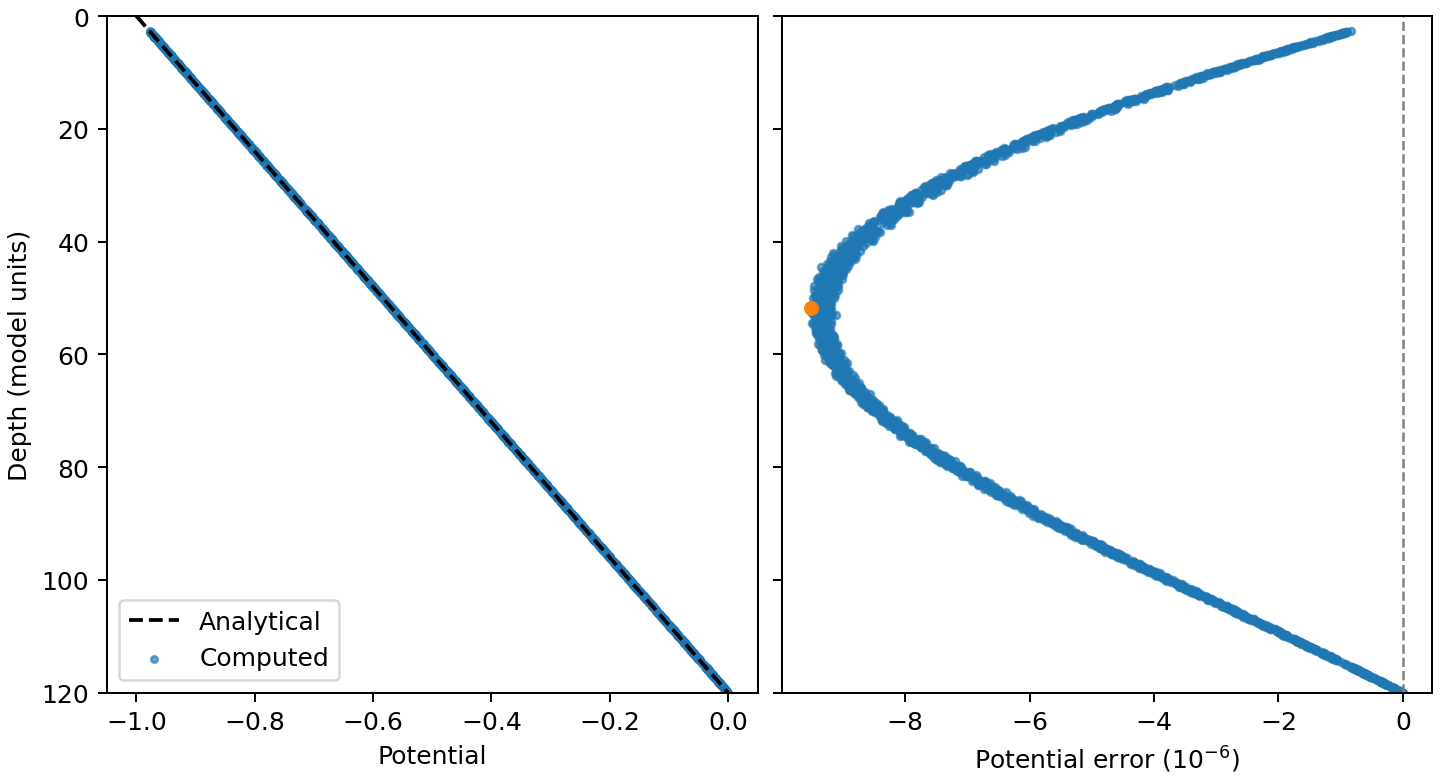
A strike ends where the selected bond first crosses the numerical terrain. The solver check uses flat ground and a flat cloud boundary, where the potential should vary linearly with depth.
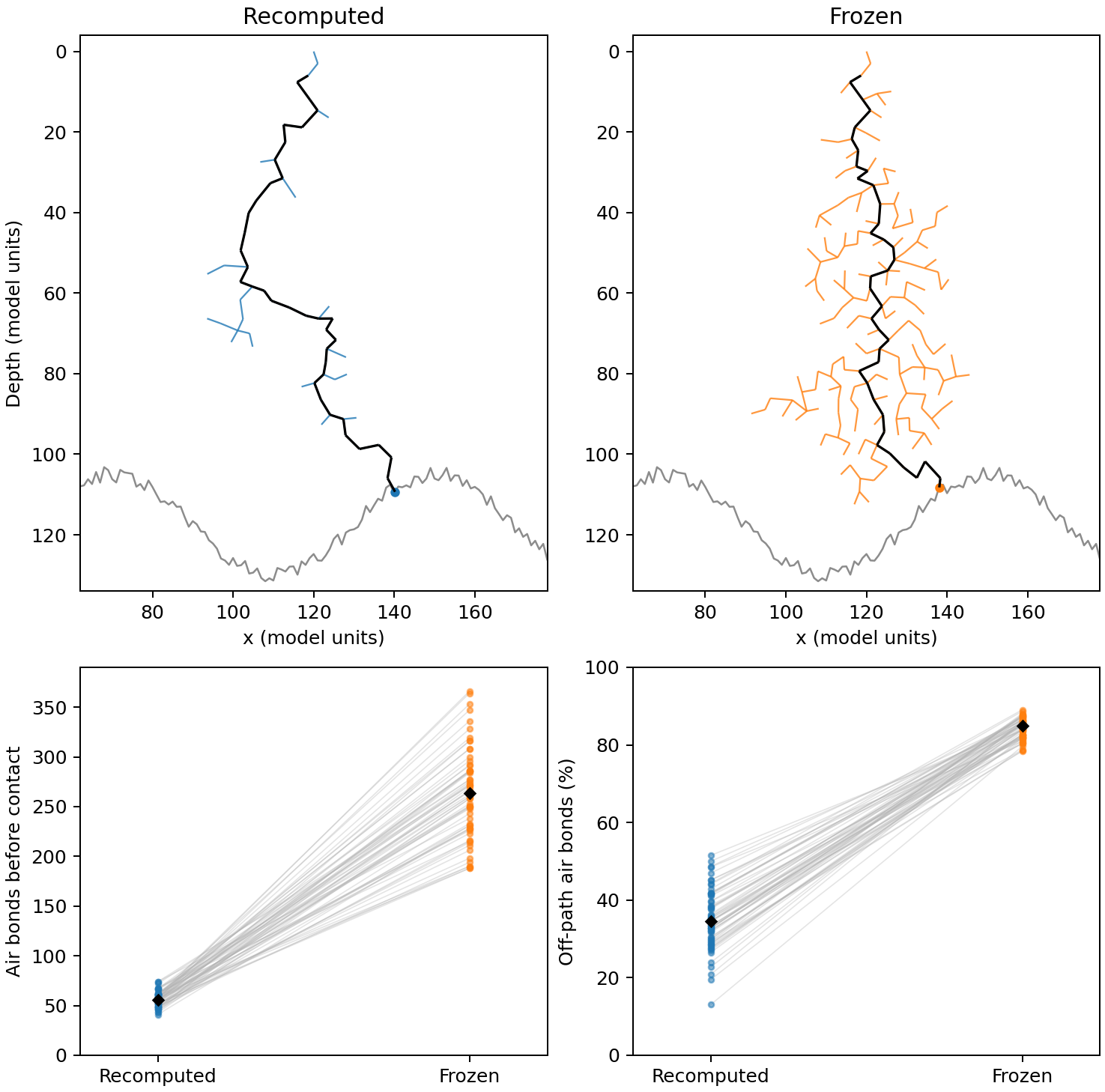
The original NetLogo model calculated the potential field at setup and moved tips using local rules. The revised model changes the field as it grows. To isolate that difference, the experiment compares two versions of the revised growth rule: one re-solves after each bond, and the other keeps the potential at free vertices fixed.
Across 64 matched trials on the same terrain, the median number of air bonds before contact was 56 with field feedback and 263.5 with the field held fixed. Both versions used the same starting state and the same sequence of random draws within each trial.